• PROMOMAG.  
  • PROMOMAG.  
  • PROMOMAG.  
  • PROMOMAG.  
  • PROMOMAG.  
  • PROMOMAG.  

Five editorial verticals, one editor, and nothing published without a person saying so.

Up to 2 hours to research and draft one article by hand  →  one conversation and one approval

work done

n8n orchestration — 61-node AI publishing pipeline
AI research agent grounded in live Google News retrieval
Draft-by-default WordPress publishing with human approval gate
Conversational drafting and approval interface — mobile and desktop
Automated featured image generation with stock fallback
Automated tag creation and category routing
Multi-category content architecture (Business, Entertainment, Science, Politics, Environment)
WordPress build, SEO structure and performance optimisation

The problem

PromoMag is a UK digital magazine covering Business, Entertainment, Science, Technology, Politics and the Environment. Every article means finding a story worth covering, checking it is still current, drafting it to a consistent editorial standard, sourcing an image, writing the SEO metadata, creating tags, assigning a category and publishing it. Done by hand that is up to two hours per article — and across six verticals it is not a workload one person can hold alongside anything else. The goal was a pipeline that could carry every one of those steps — while keeping a person in control of what actually goes live.

What we did

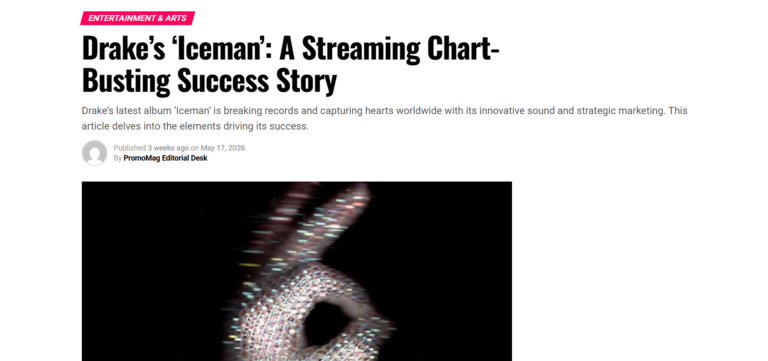
The core of PromoMag is a 61-node n8n pipeline driven through a chat interface that works the same on a phone or a desktop. The editor names a category; a research agent searches Google News live and returns five current stories, each carrying its source and publication date. Once a story is chosen, the pipeline drafts the article against that research, generates a featured image with a stock-library fallback, creates the tags, maps the category and creates the post in WordPress.

It creates it as a draft. Nothing on PromoMag publishes itself — the finished article goes back to the editor in the same conversation, and only an explicit instruction puts it live. The research agent is barred from drawing on training data: every fact has to come from a live search result with a source attached. Twelve separate failure paths report problems back into the conversation rather than dying silently. The result is a publication that runs across six verticals without an editorial team, and still cannot go to press on its own.

Controls

Publish gate. The WordPress call sends status: draft unless the editor explicitly instructs otherwise. The default outcome of every run is a draft nobody has seen go live.

Grounded research. The research agent cannot use training data. It must call a live news search and attach a source and publication date to every fact.

Failure handling. Twelve nodes carry explicit error outputs. AI failure, WordPress failure and image failure each have a named path that reports back into the chat.

Graceful degradation. If image generation fails, the pipeline falls back to a stock library rather than abandoning a finished article.

Timed expiry. The scheduled edition asks for approval and waits six hours. With no answer it deletes its own draft and says so. Silence never becomes publication.

What this means if you publish anything regularly

The same shape works wherever a person is doing repetitive knowledge work to a template — case notes, tender responses, product descriptions, client reports, internal briefings. The research changes, the approval gate does not.

Most AI content tools fail in businesses for one of two reasons: they invent things, or they publish without asking. This pipeline was designed against both. If you are producing anything regularly and the bottleneck is a person doing the same drafting job over and over, this is the pattern worth copying.


Next Project

Back to top